Uncategorized
Ultimate DSIP Peptide 5mg / 10mg Guide
May
Introduction to DSIP Peptide
DSIP Peptide (Delta Sleep-Inducing Peptide) is one of the most discussed research peptides in modern sleep science, recovery biology, and neurological research. Researchers continue investigating DSIP because of its potential interaction with sleep-related pathways, stress regulation research, recovery optimization, and wellness science.
As peptide biotechnology continues evolving, DSIP peptide research has gained attention in studies involving:
- Sleep regulation pathways
- Recovery science
- Stress-related signaling
- Cognitive wellness research
- Longevity science
- Nervous system communication
This complete guide explores what DSIP peptide is, how researchers study it, potential research applications, and why it remains popular in advanced peptide science.
Powerful Sleep & Recovery Research
Guide
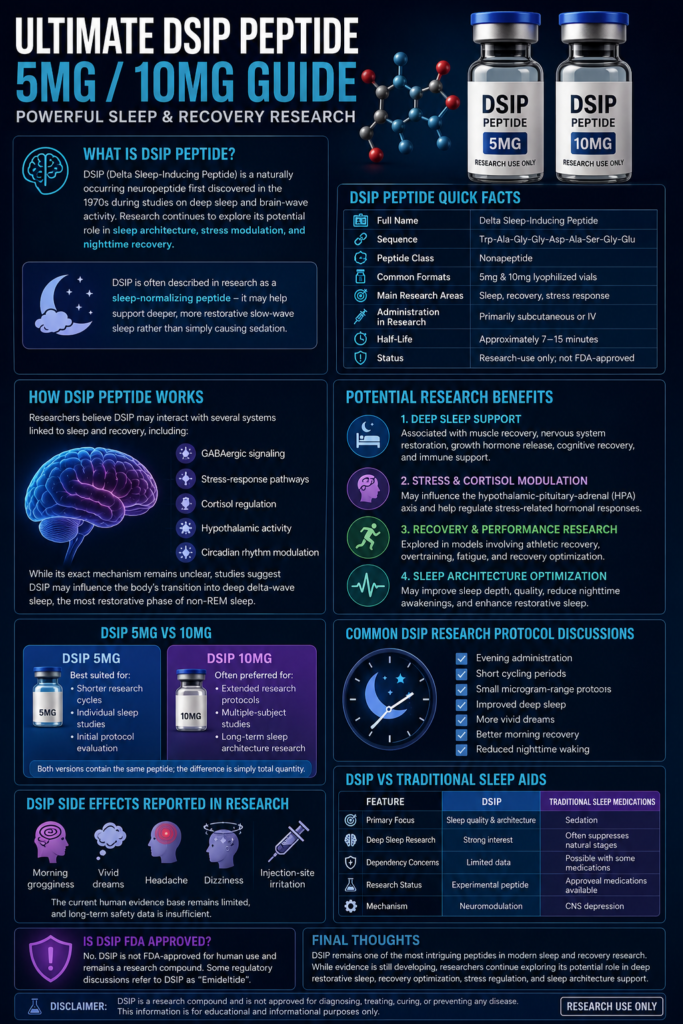
DSIP stands for Delta Sleep-Inducing Peptide, a naturally studied neuropeptide associated with sleep-related biological pathways.
Researchers investigate DSIP peptide for its potential role in:
- Sleep cycle research
- Stress response pathways
- Nervous system signaling
- Recovery optimization
- Wellness and longevity studies
DSIP has become increasingly popular among researchers studying advanced recovery and neurological peptide science.
How DSIP Peptide Works in Research
Researchers study DSIP peptide for its potential interaction with biological systems associated with sleep and recovery.
1. Sleep Regulation Research
DSIP is most commonly investigated for its potential role in sleep-related pathways.
Researchers explore whether DSIP may influence:
- Sleep cycle signaling
- Rest and recovery pathways
- Deep sleep research
- Nervous system communication
Sleep science remains one of the largest areas of peptide research today.
Stress Response Pathways
Researchers continue studying DSIP for its possible interaction with:
- Stress-related signaling
- Cortisol regulation pathways
- Recovery optimization
- Nervous system balance
This has made DSIP increasingly relevant in wellness and recovery research.
3. Recovery & Regeneration Science
Powerful Sleep & Recovery Research
Guide
Recovery science is another major area of DSIP peptide investigation.
Researchers study potential involvement in:
- Recovery optimization
- Cellular communication
- Wellness pathways
- Biological resilience
4. Cognitive & Neurological Research
DSIP is also discussed in neurological peptide research because of its connection to nervous system signaling.
Potential research areas include:
- Cognitive wellness
- Neurological communication
- Brain-related peptide science
- Focus and recovery studies
Potential Benefits Researchers Associate With DSIP Peptide
Although research remains ongoing, scientists commonly investigate DSIP peptide for possible involvement in:
- Sleep support pathways
- Recovery optimization
- Stress regulation research
- Nervous system communication
- Cognitive wellness studies
- Longevity science
- Wellness optimization
Research peptides are intended strictly for laboratory and scientific investigation purposes only.
DSIP Peptide 5mg vs 10mg Introduction to DSIP Peptide
Researchers may select different peptide concentrations depending on laboratory protocols and research objectives.
DSIP Peptide 5mg
Commonly used for:
- Smaller-scale research
- Sleep pathway studies
- Neurological investigations
DSIP Peptide 10mg
Often selected for:
- Extended research protocols
- Advanced recovery studies
- Long-term laboratory investigations
Researchers should always follow proper scientific handling and storage procedures.
Why Sleep Peptide Research Is Growing Rapidly
Modern science increasingly recognizes the importance of sleep in:
- Recovery biology
- Cognitive wellness
- Longevity pathways
- Metabolic function
- Nervous system regulation
As a result, peptides connected to sleep and recovery science continue gaining attention worldwide.
DSIP & Longevity Research
Researchers continue exploring how sleep-related pathways may influence healthy aging science.
Studies involving sleep optimization and recovery pathways are increasingly connected to:
- Cellular maintenance
- Wellness resilience
- Recovery biology
- Longevity signaling
This has contributed to growing interest in DSIP peptide research.
High Purity & Laboratory Standards Matter
Quality remains essential in peptide research.
Premium DSIP peptide products should include:
- Third-party testing
- HPLC purity verification
- Certificates of Analysis (COAs)
- Sterile laboratory handling
- Research-grade manufacturing standards
Researchers should always prioritize purity, transparency, and consistency.
Proper Storage for DSIP Peptide
Researchers commonly recommend:
- Cool storage temperatures
- Controlled laboratory conditions
- Sterile handling
- Protection from heat and moisture
Correct storage procedures help maintain peptide integrity.
The Future of DSIP Peptide Research
The future of sleep peptide science looks extremely promising.
Researchers continue exploring DSIP peptide in:
- Sleep optimization studies
- Recovery science
- Cognitive wellness research
- Longevity biology
- Nervous system pathways
- Stress response science
As peptide biotechnology advances, DSIP is expected to remain a major focus in advanced recovery and neurological research. Introduction to DSIP Peptide
Frequently Asked Questions (FAQ)
What is DSIP peptide?
DSIP stands for Delta Sleep-Inducing Peptide, a neuropeptide researched for its potential role in sleep pathways, recovery science, and stress regulation studies.
What is DSIP peptide used for in research?
Researchers investigate DSIP in studies involving:
- Sleep cycle pathways
- Recovery optimization
- Stress-related signaling
- Cognitive wellness
- Nervous system communication
Why is DSIP peptide popular?
DSIP has gained attention because researchers are highly interested in peptides connected to deep sleep research and recovery science. Introduction to DSIP Peptide
Is DSIP studied in longevity research?
Yes. Researchers explore sleep-related pathways in healthy aging and longevity science, making DSIP increasingly relevant in advanced biotechnology studies.
Is DSIP peptide intended for human consumption?
Research peptides are generally intended for laboratory research purposes only and are not approved to diagnose, treat, cure, or prevent disease. Introduction to DSIP Peptide
Final Thoughts
DSIP Peptide 5mg / 10mg remains one of the most exciting compounds in modern sleep and recovery peptide research. Researchers continue studying its potential role in sleep signaling, stress response pathways, nervous system communication, and wellness science.
As interest in recovery optimization and longevity research continues expanding, DSIP peptide is expected to remain highly important in:
The future of peptide science continues evolving rapidly, and DSIP remains at the forefront of advanced recovery and sleep-related biotechnology research. Introduction to DSIP Peptide
Is DSIP FDA Approved?
No. DSIP is not FDA-approved for human use and remains a research compound. Some regulatory discussions refer to DSIP as “Emideltide.”
Final Thoughts
DSIP remains one of the most intriguing peptides in modern sleep and recovery research. While evidence is still developing, researchers continue exploring its potential role in: Introduction to DSIP Peptide
- Deep restorative sleep
- Recovery optimization
- Stress regulation
- Sleep architecture support
Introduction to DSIP Peptide Current findings suggest DSIP may function more as a sleep-quality modulator than a traditional sedative, making it especially interesting in recovery-focused research settings.
Disclaim Introduction to DSIP Peptideer: DSIP is a research compound and is not approved for diagnosing, treating, curing, or preventing any disease. This article is for educational and informational purposes only.
