Uncategorized
The Ultimate Beginner’s Guide to Research Peptides (2026 Edition)
May
The Ultimate Beginner’s Guide to Research Peptides (2026)
The Ultimate Beginner’s Guide to Research Peptides (2026), Research peptides have become one of the fastest-growing topics in modern scientific research, performance science, recovery studies, and longevity exploration. From tissue regeneration research to metabolic signaling studies, peptides are now being investigated in laboratories worldwide for their unique biological properties.
But for beginners, the world of research peptides can feel overwhelming
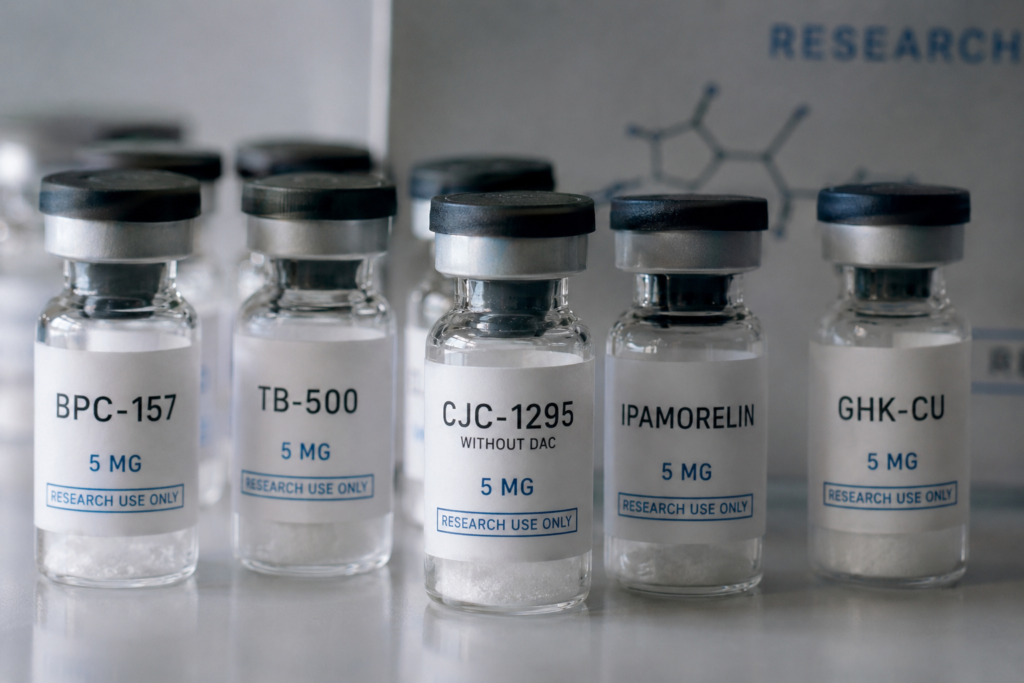
What exactly are peptides? How do research peptides work? Why are scientists so interested in compounds like BPC-157, TB-500, CJC-1295, and GHK-Cu? And most importantly, how can researchers identify high-quality peptides with proper purity and testing standards?
This complete beginner’s guide explains everything you need to know about research peptides in simple, clear language.
What Are Research Peptides?|The Ultimate Beginner’s Guide to Research Peptides (2026)
Research peptides are short chains of amino acids that act as signaling molecules within the body. Amino acids are the building blocks of proteins, and when linked together in specific sequences, they form peptides capable of influencing biological functions.
In scientific research, peptides are studied for their potential roles in:
- Cellular communication
- Tissue repair mechanisms
- Hormonal signaling
- Metabolic regulation
- Cognitive function
- Recovery pathways
- Skin and collagen research
- Longevity science
Unlike large proteins, peptides are smaller and more targeted, making them highly valuable in laboratory environments.
Why Peptides Matter in Scientific Research for the Ultimate Beginner’s Guide to Research Peptides 2026
The human body naturally produces thousands of peptides. These compounds help regulate critical biological activities including:
- Sleep cycles
- Immune response
- Muscle signaling
- Inflammation pathways
- Cellular growth
- Hormone release
Because peptides already exist naturally in the body, researchers are interested in understanding how synthetic research peptides may interact with these same biological pathways.
This is why peptide research has expanded rapidly in recent years.
How Do Research Peptides Work on the Ultimate Beginner’s Guide to Research Peptides 2026
Peptides function primarily as signaling molecules.
Think of them as biological messengers. When a peptide interacts with a receptor on a cell, it can trigger a specific response inside the body.
Different peptides activate different pathways.
For example: Ultimate Beginner’s Guide to Research Peptides 2026
- Some peptides are researched for recovery signaling
- Others are investigated for growth hormone pathways
- Some are explored for metabolic regulation
- Certain peptides are studied for cognitive and neurological effects
The precision of peptides is one reason they are so important in modern scientific investigation.
The Most Popular Research Peptides Explained
Below are some of the most widely researched peptides today.
BPC-157
BPC-157 is one of the most discussed recovery-related peptides in scientific communities.
Researchers study BPC-157 for its potential role in:
- Tissue signaling
- Recovery pathways
- Angiogenesis research
- Cellular repair mechanisms
Because of these research interests, BPC-157 has become highly popular in laboratory settings.
the Ultimate Beginner’s Guide to Research Peptides 2026
- BPC-157 research
- BPC-157 peptide
- recovery peptide research
- tissue repair peptide
TB-500
TB-500 is a synthetic version of Thymosin Beta-4, a naturally occurring peptide found in the body.
Research surrounding TB-500 often focuses on:
- Cellular migration
- Muscle recovery pathwayshttps://hkpep.cc/coas/
- Soft tissue signaling
- Inflammatory response mechanisms
TB-500 is frequently discussed alongside BPC-157 in recovery-related peptide research.
the Ultimate Beginner’s Guide to Research Peptides 2026
- TB-500 research
- recovery peptides
- peptide regeneration research
CJC-1295
CJC-1295 is commonly researched for its interaction with growth hormone pathways.
Scientists study it in relation to:
- Hormone signaling
- Recovery research
- Sleep-related pathways
- Metabolic research
Ultimate Beginner’s Guide to Research Peptides 2026
- CJC-1295 peptide
- growth hormone peptide research
- peptide metabolism research
Ipamorelin
Ipamorelin is another peptide associated with growth hormone research.
Researchers investigate Ipamorelin because it selectively interacts with specific receptors involved in hormone signaling.
Strong Keywords:
- Ipamorelin research
- growth hormone secretagogue
- peptide hormone research
GHkCu
GHK-Cu is a copper peptide widely studied in skin and cosmetic science.
Research areas include:
- Collagen signaling
- Skin regeneration pathways
- Hair research
- Anti-aging investigations
Strong Keywords:
- GHK-Cu peptide
- copper peptide research
- anti-aging peptide
Why Peptide Purity Matters
One of the most important factors in peptide research is purity.
High-quality research peptides should undergo rigorous third-party testing to confirm:
- Identity
- Purity percentage
- Stability
- Molecular composition
Low-quality peptides may contain:
- Contaminants
- Incorrect amino acid sequences
- Degradation products
- Improper concentrations
For serious researchers, purity is non-negotiable.
Understanding HPLC Testing
HPLC stands for High-Performance Liquid Chromatography.
This is one of the most common testing methods used to verify peptide purity.
HPLC testing helps determine:
- Peptide composition
- Purity levels
- Presence of contaminants
- Batch consistency
Many reputable peptide suppliers provide Certificates of Analysis (COAs) showing HPLC results.
What Is a Good Purity Percentage?
Most premium research peptides aim for:
- 98%+ purity
- Third-party laboratory verification
- Transparent testing documentation
Researchers should always review purity reports before purchasing peptides.
Strong Keywords the Ultimate Beginner’s Guide to Research Peptides 2026
- peptide purity testing
- HPLC peptide testing
- research peptide quality
- peptide COA
What Does “Research Use Only” Mean?
Research peptides are typically labeled:
“For Research Use Only”
This designation means the compounds are intended strictly for:
- Laboratory research
- Scientific investigation
- Analytical studies
They are not approved for:
- Human consumption
- Medical treatment
- Diagnostic use
Understanding this distinction is extremely important when purchasing peptides.
Lyophilized Peptides Explained
Most research peptides are sold in lyophilized form.
Lyophilization is a freeze-drying process that helps:
- Preserve peptide stability
- Extend shelf life
- Protect molecular integrity
The resulting powder is typically stored in sealed vials until used in laboratory environments.
- lyophilized peptides
- peptide storage
- freeze-dried peptide research
How to Store Research Peptides Properly
Proper storage is essential for maintaining peptide stability.
General Storage Guidelines
Lyophilized Peptides
- Store in a cool, dry place
- Avoid direct sunlight
- Refrigeration is often recommended
Reconstituted Peptides
- Typically require refrigeration
- Avoid repeated freeze-thaw cycles
- Use sterile laboratory handling procedures
Improper storage may reduce peptide integrity over time.
Common Mistakes Beginners Make With Research Peptides
1. Buying From Unverified Sources
Always look for:
- Third-party testing
- Transparent COAs
- Batch verification
- Positive industry reputation
2. Ignoring Purity Standards
Cheap peptides often compromise quality.
Researchers should prioritize:
- Purity
- Transparency
- Testing documentation
3. Improper Storage
Heat, moisture, and sunlight can damage peptide stability.
4. Not Understanding Research Limitations
Research peptides are investigational compounds, not approved treatments.
Understanding proper research context is critical.
How to Identify a High-Quality Peptide Supplier
When evaluating peptide suppliers, look for:
Third-Party Testing
Independent laboratory verification is essential.
Transparent COAs
Reputable companies openly share testing data.
Clear Product Information
High-quality suppliers provide:
- Batch numbers
- Storage guidelines
- Purity data
- Research specifications
Professional Manufacturing Standards
Reliable peptide suppliers prioritize:
- Sterile handling
- Consistency
- Stability
- Laboratory-grade processes
Strong Keywords:
- best research peptide supplier
- high purity peptides
- laboratory tested peptides
The Future of Peptide Research
Peptide science continues to expand rapidly.
Researchers are currently exploring peptides in areas such as:
- Longevity science
- Metabolic pathways
- Cognitive research
- Cellular recovery
- Skin biology
- Performance science
As scientific understanding grows, peptides are expected to remain a major focus in biotechnology and molecular research.
Frequently Asked Questions About Research Peptides
Are peptides steroids?
No. Peptides and steroids are completely different compounds with different mechanisms.
Why are peptides popular in research?
Peptides are highly targeted signaling molecules that may influence specific biological pathways.
What is the difference between peptides and proteins?
Proteins are larger chains of amino acids, while peptides are shorter amino acid chains.
Why is peptide purity important?
Purity helps ensure accurate, reliable, and consistent research results.
What are the most researched peptides?
Some of the most discussed peptides include:
Final Thoughts
Research peptides represent one of the most exciting areas of modern scientific investigation.
From recovery pathways to longevity science, peptides continue to gain attention for their ability to interact with highly specific biological systems.
For beginners, the most important factors are:
- Understanding peptide fundamentals
- Prioritizing purity and testing
- Choosing transparent suppliers
- Learning proper storage procedures
- Staying informed through science-based education
As peptide research evolves, educational resources and high-quality laboratory standards will become increasingly important for researchers worldwide.

Pingback: Buy Research Peptides Online USA Genuine